Finding a sustainable balance between affordability and quality in the youth garment sector is a primary challenge for B2B buyers. When searching for discount childrens clothes, the goal is not merely to find the lowest price, but to secure high-value manufacturing that maintains durability and safety. This article examines the procurement landscape for children's apparel, focusing on how professional sourcing reduces costs without compromising product integrity.
The global textile market is characterized by volatile raw material costs and shifting regulatory requirements. For businesses importing from hubs like Hebei province in China, understanding the vertical integration of suppliers—from raw fabric production to final garment assembly—is essential. By analyzing the relationship between production scale and unit cost, buyers can better navigate the complexities of wholesale procurement for young children's attire.
Readers will explore a detailed guide on evaluating supplier capabilities, analyzing the impact of fabric selection on long-term value, and implementing quality control measures. We will provide a framework for assessing OEM and ODM partners to ensure that the final products meet specific market demands while maintaining a competitive price point in the discount childrens clothes segment.
Sourcing Value in Youth Apparel
The procurement of youth garments requires a distinct approach compared to adult clothing due to more stringent safety regulations and the need for high-frequency durability. In the B2B context, "value" is defined by the intersection of material longevity, manufacturing efficiency, and logistical reliability. Companies located in textile hubs, such as Shijiazhuang, leverage regional advantages to optimize costs. Hantex International Co., Ltd., for example, utilizes its proximity to major ports like Tianjin and Qingdao and its network of over 100 partner factories to streamline the movement of goods, thereby reducing the landed cost for international buyers.
True cost-efficiency in children's wear is achieved through strategic fabric selection and production planning. By utilizing polyester blends or specialized soft-shell materials, manufacturers can offer waterproof and breathable properties that increase the product's market appeal while maintaining a competitive wholesale price. The ability to handle small orders and provide samples within 7 days allows buyers to test market viability before committing to large-scale production, effectively reducing the financial risk associated with inventory stockpiling.
B2B Procurement Strategies for Kids Wear
Successful procurement depends on a holistic evaluation of the supply chain. Rather than focusing on the sticker price, buyers must analyze the total cost of ownership, including quality failure rates and delivery timelines. The following sections break down the critical dimensions of sourcing high-quality, affordable youth apparel from professional manufacturers.
Material Quality Assessment
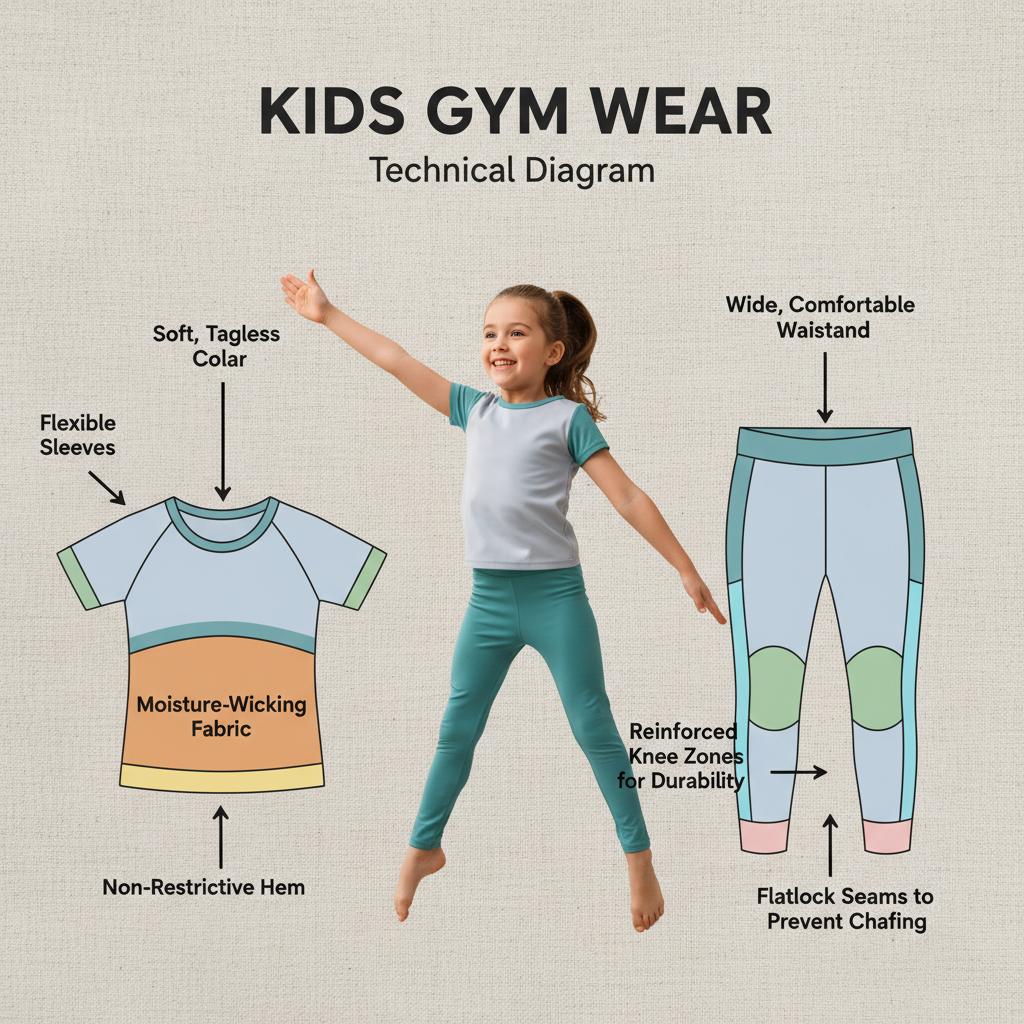
Material selection is the primary driver of both cost and performance. For activewear, the use of 92% Polyester and 8% Elastane provides the necessary stretch and moisture-wicking capabilities. Buyers should evaluate the GSM (grams per square meter) to ensure fabric thickness is appropriate for the intended season and use case.
| Material Type | Key Property | Primary Use Case | Buyer Checkpoint |
|---|---|---|---|
| Polyester Blend | Quick Dry | Active/Sports Wear | Wicking Rate |
| Soft-shell | Windproof | Outdoor/Winter | Breathability Index |
| PVC/EVA | Waterproof | Rainwear | Tear Resistance |
| Cotton Blend | Breathability | Casual Wear | Shrinkage Rate |
| Nylon | Abrasion Resistance | Outerwear | Tensile Strength |
| Elastane | Flexibility | Athletic Gear | Recovery Percentage |
Manufacturing Cost Drivers
Unit prices are influenced by order volume, design complexity, and fabric sourcing. Vertical integration, where a supplier owns multiple factories for different processes (such as separate units for garments and rainwear), significantly reduces middleman markups. Leveraging a supplier's existing network of raw material partners allows for more competitive pricing on bulk fabric purchases.
Compliance and Safety Standards
Safety is non-negotiable in youth apparel. Professional suppliers adhere to international certifications such as CE, EN470-1, and ASTM D6413. Buyers must verify that dyes are non-toxic and that small parts (like buttons or zippers) are securely attached to prevent choking hazards, ensuring the products are compliant with the destination country's laws.
Customization and OEM Capabilities
The ability to offer OEM (Original Equipment Manufacturer) and ODM (Original Design Manufacturer) services is a key differentiator. Customization allows brands to differentiate their product lines through specific colorways, branding, and ergonomic adjustments, such as elasticated half-waists and specialized pocket placements for utility.
Supply Chain Lead Times
Efficiency in the supply chain directly impacts market responsiveness. A supplier's proximity to major logistics hubs—such as being 3 hours from Beijing Airport—minimizes domestic transit time. Rapid sampling (within 7 days) and on-time delivery are critical metrics for maintaining a lean inventory model.
Inventory Risk Management
Accepting small orders is a significant advantage for new brands or seasonal testing. By starting with lower volumes, buyers can analyze consumer feedback and adjust specifications before scaling. This mitigates the risk of overproduction and reduces the need for aggressive discounting later in the product lifecycle.
Supplier Evaluation Metrics
When evaluating a partner, buyers should look for a proven track record of international trade (e.g., 15-20 years of experience) and a robust quality control system. Having dedicated QC personnel in both the trade department and at the factory level ensures that defects are caught before shipment, reducing costly returns.
FAQ
What defines a "high-value" source for youth apparel?
A high-value source is a manufacturer that combines competitive wholesale pricing with strict adherence to safety standards and material quality. It involves a supplier who can offer vertical integration, reducing costs through direct control of production and logistics, while providing flexible order quantities to manage buyer risk.
How can I ensure the quality of affordable kids' clothing?
Quality assurance is achieved through three steps: first, requesting detailed material specifications (such as the polyester/elastane ratio); second, verifying international certifications (CE, ASTM); and third, ensuring the supplier has a multi-layered QC process involving both factory-level and export-department inspections.
What are the advantages of OEM services for children's wear?
OEM services allow businesses to customize designs, colors, and branding to fit their specific target market. This prevents product homogenization and allows for the integration of functional features, such as quick-dry fabrics or waterproof coatings, tailored to the specific needs of their customer base.
Does a supplier's location impact the final product cost?
Yes, significantly. Suppliers located in industrial hubs like Hebei benefit from lower raw material costs and better access to logistics. Proximity to major ports (like Tianjin or Qingdao) reduces domestic freight charges and speeds up the export process, which lowers the overall landed cost for the importer.
Are small orders feasible for B2B garment sourcing?
While large volumes typically yield the lowest unit price, many professional exporters now accept smaller orders to support brand growth and market testing. This flexibility allows buyers to validate product-market fit before scaling, which is a more sustainable long-term procurement strategy.
What fabric is best for durable, affordable youth activewear?
A blend of high-quality polyester and elastane is typically ideal. This combination provides the necessary durability, moisture-wicking properties, and flexibility required for children's activities, while remaining cost-effective for mass production compared to high-end luxury fibers.
References and further reading
- International Standards for Children's Clothing Safety (ISO/ASTM)
- Global Textile Supply Chain Logistics and Port Efficiency Analysis
- The Impact of Vertical Integration on Garment Manufacturing Costs
Related Articles